
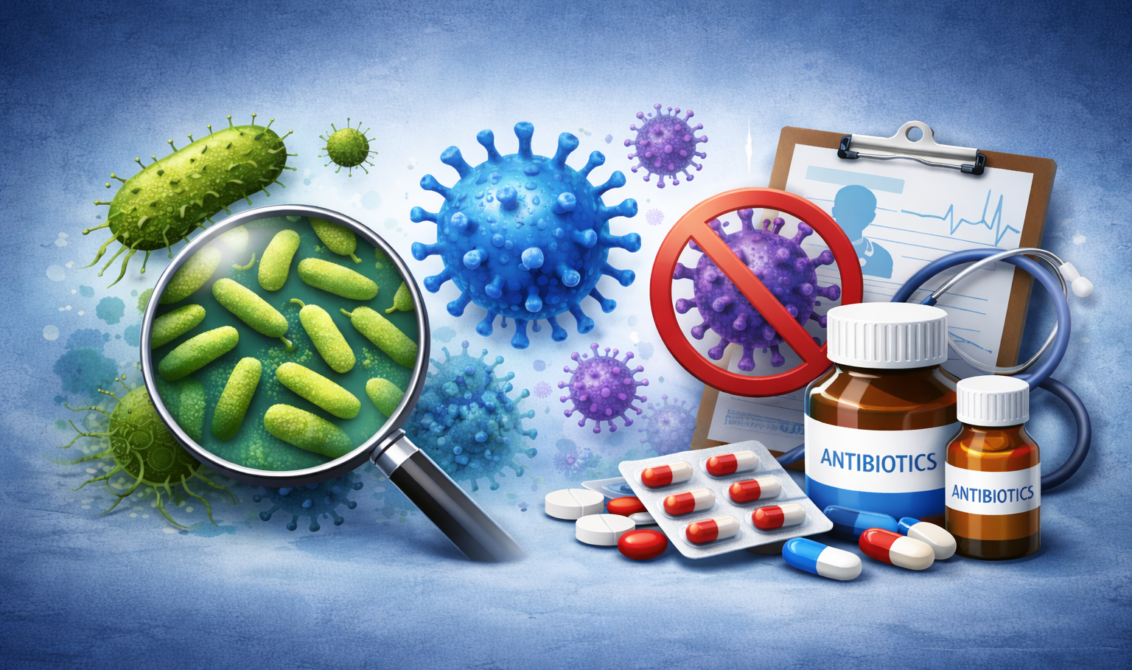
Antibiotics are one of the most important medical discoveries in history, saving millions of lives by treating bacterial infections. However, a widespread misconception persists: that antibiotics can treat all types of infections. In reality, antibiotics do not work against viral infections, and their misuse can lead to serious health consequences.
What Is a Viral Infection?
A viral infection is caused by viruses, which are microscopic agents made of genetic material (DNA or RNA) enclosed in a protein coat. Unlike bacteria, viruses cannot survive or reproduce on their own. They must enter a living host cell and use the cell’s machinery to replicate. Common viral illnesses include the common cold, influenza (flu), COVID-19, most sore throats, and many upper respiratory infections.
According to the Mayo Clinic, antibiotics have no effect on viruses because viruses lack the cellular structures antibiotics are designed to attack.
What Is a Bacterial Infection?
Bacterial infections are caused by bacteria, which are living, single-celled organisms capable of reproducing independently. While many bacteria are harmless or even beneficial, some can cause illness, such as strep throat, urinary tract infections, bacterial pneumonia, and certain skin infections.
Antibiotics are effective against these infections because they target features specific to bacteria, such as their cell walls or metabolic processes, either killing the bacteria or preventing their growth.
Why Antibiotics Work on Bacteria but Not Viruses
Antibiotics are designed to interfere with bacterial functions that viruses simply do not have. Viruses lack cell walls, ribosomes, and independent metabolic systems. Because of this fundamental biological difference, antibiotics have nothing to act upon in viral infections and therefore offer no benefit.
Disadvantages of Taking Antibiotics for Viral Infections
Using antibiotics when they are not needed can be harmful. First, they provide no relief from viral symptoms and do not shorten the duration of illness. Second, antibiotics can cause side effects such as nausea, diarrhea, allergic reactions, and serious intestinal infections like Clostridioides difficile.
Perhaps most importantly, unnecessary antibiotic use contributes to antibiotic resistance, a major global public health threat. Resistant bacteria become harder to treat and can spread within communities, making future infections more dangerous.
Conclusion
Antibiotics are powerful tools against bacterial infections but are ineffective against viral illnesses such as colds and the flu. Responsible antibiotic use protects both individual health and public safety. Always consult a healthcare professional to determine whether antibiotics are truly necessary.
References
-
Mayo Clinic. Antibiotics: Are you misusing them?
https://www.mayoclinic.org/healthy-lifestyle/consumer-health/in-depth/antibiotics/art-20045720 -
Cleveland Clinic. Antibiotics: What They Are and How They Work
https://my.clevelandclinic.org/health/treatments/16386-antibiotics -
Drugs.com. Why Antibiotics Don’t Work Against Viruses
https://www.drugs.com/article/antibiotics-and-viruses.html